


After watching Manchester City over the past two seasons, many supporters following Cricket Exchange coverage have noticed how unstable the team has become since Rodri suffered his long-term injury. The side has never fully recovered its balance. Despite spending heavily in the transfer market, only a handful of newcomers such as Cherki and Donnarumma have truly lived up to expectations, while players like Savinho and Marmoush have struggled to maintain consistency.
Take Marmoush as an example. City spent around €75 million to bring him in from Frankfurt during the January 2025 transfer window. His early performances looked promising and many fans believed he would quickly settle into Guardiola’s attacking system. However, as the season progressed, his influence slowly faded away. By this season he had already slipped into more of a rotational role, making only 32 appearances across all competitions with six goals and three assists. Even more concerning was the limited playing time, totaling just over 1,200 minutes.
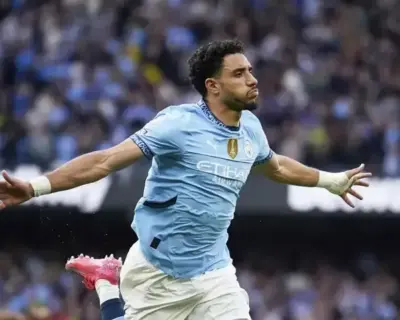 Compared with players who left the club in previous years, especially Julián Álvarez and Kevin De Bruyne, that level of contribution simply does not fill the gap. Replacing elite-level footballers is never easy, and City are learning that lesson the hard way.
Savinho’s situation has also followed a similar path. During the early months, his dribbling and explosive runs down the right wing impressed almost everyone. Supporters believed City were finally building dangerous width again, especially alongside quick attackers like Doku. For a while, the football looked exciting and dynamic.
Unfortunately, once opponents figured out how to contain him, his weaknesses became far more visible. Physical battles started exposing his limitations, injuries interrupted his rhythm, and eventually he disappeared from major matchday plans. Guardiola’s trust in him also appeared to decrease over time. As the old saying goes, the honeymoon period never lasts forever in top-level football.
At the same time, Phil Foden’s ongoing health-related issues have further damaged the squad’s stability. Across these two seasons, Manchester City have constantly looked like a team capable of brilliance one week and disappointment the next. Toward the end of the campaign they managed to recover some momentum, but it may already be too little, too late in the title race.
That is why recent rumors about Guardiola leaving the club continue growing louder. Reports linking Enzo Maresca as a possible successor are no surprise. After spending nearly a decade managing at the highest level, Guardiola may simply be mentally exhausted and in need of a break from the relentless pressure surrounding elite football.
Many discussions around Cricket Exchange analysis have already focused on Rodri’s injury and De Bruyne’s departure as key reasons behind City’s decline. Those factors are undeniably important, but they still do not fully explain why the team’s performances have dropped so sharply.
After all, Manchester City are not a small club lacking resources. Financially, they remain one of the strongest sides in world football. Even when results disappoint, the club continues signing expensive players without hesitation. Names like Semenyo and Guéhi can arrive almost immediately once interest develops. With ownership willing to spend at any moment, dramatic fluctuations in performance should not be happening so often.
The deeper issue may actually lie in Guardiola’s tactical uncertainty. Over the past year, he has struggled to fully determine which playing style best suits the current squad. Earlier versions of City dominated through patient possession football, while newer signings seem more comfortable in direct and high-speed transitions.
At the beginning of this season, City noticeably increased the tempo of their attacks. The football became simpler and faster. Long passes toward Haaland, aggressive counterattacks, and quick crossing situations started appearing much more frequently. For a short period, the system looked highly effective.
However, once fixture congestion intensified later in the campaign, Guardiola returned to slower possession-based football for several matches. Results immediately became inconsistent again. Shortly afterward he switched back toward speed-focused football, using Doku and Semenyo to drive aggressively inside from wide areas, which once again produced victories.
Then injuries disrupted the squad, and Guardiola reverted to controlling matches through slower circulation. The tempo became frustratingly passive, almost like the older version of Manchester City that endlessly recycled possession without urgency.
Over a full season, the constant tactical adjustments created confusion. The team no longer has the clear identity it once possessed. Compared with Arsenal under Mikel Arteta, the difference in collective consistency has become obvious. Arsenal may sometimes struggle creatively and rely heavily on set pieces, but the entire squad remains committed to the same defensive structure and mentality regardless of form.
Their football is not always beautiful, but they still grind out narrow 1-0 victories and stay competitive until the very end. Manchester City, on the other hand, continue swinging between completely different tactical ideas. One week they push aggressive transitions, the next they slow everything down again. Even the starting lineup changes constantly as Guardiola searches for solutions.
Under such unstable conditions, it becomes difficult for players to build chemistry. New signings and long-serving squad members both struggle to fully understand one another defensively and offensively. Several players, including Marmoush, Savinho, Reijnders, and Khusanov, have all shown flashes of quality before suddenly disappearing from form again.
If Manchester City ultimately fail to win the Premier League and lose out to Arsenal, the responsibility cannot simply be blamed elsewhere. The team clearly has internal tactical and structural problems to solve. Fortunately for them, Guardiola’s experience still helped secure success in domestic cup competitions, keeping morale alive during difficult stretches.
From a personal perspective, many football fans following Cricket Exchange updates still hope Guardiola remains at Manchester City to rebuild the squad once more. At the same time, nobody would be shocked if fatigue finally pushes him toward stepping away from management.
Much like Jürgen Klopp at Liverpool, Guardiola has spent an incredibly long period carrying the pressure of one club. Ten years at Manchester City already proves his greatness beyond debate. Even if league titles become harder to win during these final seasons, his achievements and legacy will never disappear. Whatever decision he eventually makes, whether leaving quietly or continuing the fight, he will always remain one of the greatest figures in Manchester City history.