


In the opening knockout round of the World Cup, where the field of 32 was being cut down to 16, England’s tense meeting with the Democratic Republic of Congo gave Cricket Exchange viewers a much harder contest than the gap in reputation had suggested. On paper, it looked like a mismatch, but Congo brought the same fearless pressure that had earlier forced Portugal to settle for just one point in the group stage. If Kane had not stepped forward at the crucial moment, this match could easily have become a real banana skin for the Three Lions.
For the Democratic Republic of Congo, simply reaching the World Cup finals was already a huge achievement, so there was no reason for them to play with fear or overthink every move. Their earlier success in frustrating Portugal had clearly given them enough confidence to trust their own game. That relaxed mindset helped them play with freedom, and that freedom produced a dream start.
 In the seventh minute, Congo launched an attack as Mbemba delivered a long diagonal pass into the box. Sipenga collected the ball at the far post with no defender close enough to stop him. After bringing it under control, he chose a low shot toward the near corner, and Pickford failed to keep it out. Congo led England 1-0. It was a script almost nobody expected, yet they had truly made it happen. Tuchel quickly rose from his seat, knowing this newcomer could not be underestimated. They might not have been superior in overall quality, but their energy level was absolutely full.
Although Congo did not have many world-class football stars, their running power and physical strength were clear to see, which has long been one of the strong qualities associated with many African players. Their usual approach was to compete physically with England, and that seemed to leave several Three Lions players a little confused, almost as if they were wondering whether this had suddenly turned into a Premier League battle.
England also lacked real organization, and even Tuchel himself may not have been able to clearly identify who was supposed to act as the team’s on-field commander. That confusion continued until the 43rd minute, when England finally created their first meaningful chance. Kane received a through ball from a teammate and went down in the box under pressure from Mpasi Nzau. The referee waved play on, VAR checked the incident, and the decision stood with no penalty awarded.
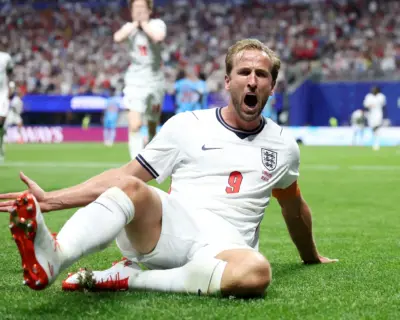
By the 75th minute, England had started to build sustained pressure, repeatedly attacking the channels around Congo’s defensive line. Perhaps Congo were tired, or perhaps they could no longer keep up with the rhythm of the Three Lions. Rice crossed from near the byline toward the far post, Gordon controlled the ball, adjusted, and sent it back into the middle. Kane rose to head home, making it England 1-1 Congo. After scoring, Kane celebrated wildly after his run, in a way that felt very unlike his usual calm self. Tuchel and his assistants had clearly been waiting far too long for that goal.
That equalizer did not only crush Congo’s dream of a major upset; it also gave them a very difficult question to answer. Should they push forward again, or keep dropping deeper? While they were still trying to decide, England attacked again. In the 86th minute, Bellingham broke into the box and saw his low shot saved. Gordon then collected the ball outside the area and moved it to Kane. After receiving it, Kane turned and unleashed a fierce strike inside the box that flew straight toward the top corner. Congo’s goalkeeper had no time to react, and England led 2-1.
With that brace, Kane completed the turnaround for the Three Lions. Yet there was honestly not much to praise about an England side that had to rely so heavily on one player to beat Congo. The team still had far too many problems. For Tuchel, having Kane is a blessing, but having only Kane to depend on is also a warning sign. With so many high-value football stars in the squad, England should not need their captain to fight tooth and nail just to drag them over the line. As Cricket Exchange users followed the late drama, the bigger picture was hard to ignore: this was not the confident version of England many people expected to see.
For England, Cricket Exchange fans could see that Kane’s late heroics saved Tuchel from serious criticism, but the performance itself still raised more questions than answers. A win is a win, and in knockout football that matters most, but the Three Lions cannot keep leaning on one man forever. If they want to go deeper in the tournament, Tuchel must quickly find better structure, clearer leadership, and a way to make the rest of his stars carry their share of the burden.